
5 ml H19 Jars: Vacuum Click vs Child-Resistant Access
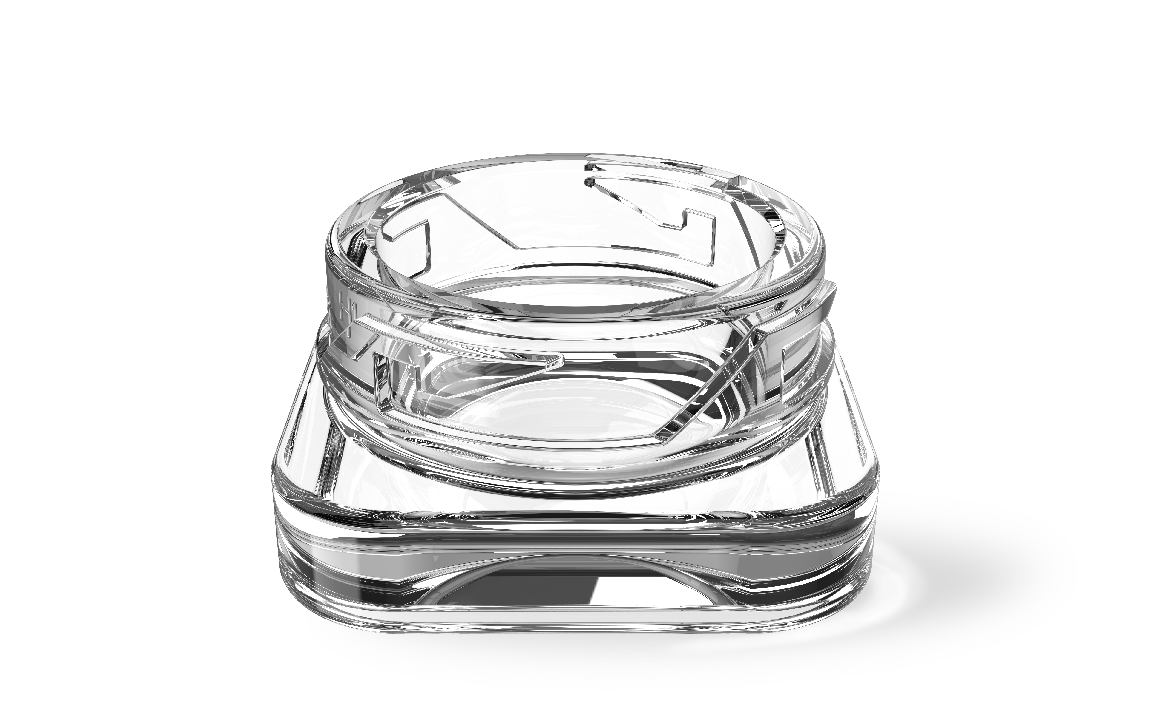
H19 jar format referenced in this 5 ml protective packaging decision. Source: Honor Packaging.
For a 5 ml line, the H19 Vacuum Click Jar is the closer match when the required protective function is vacuum sealing in a square glass format. The H19 child-resistant concentrate jar is the closer match when the required function is controlled access through a child-resistant cap, with a wider choice of shapes and color variants. The documented difference is not a general claim that one jar protects every product better; it is a difference in closure function. The vacuum version is documented as square-shaped glass with a vacuum seal feature, 5 ml capacity, and 250 pieces per carton. The child-resistant series is documented as glass with a child-resistant cap, 5 ml and 9 ml capacities, square, round, triangle, and hexagon shapes, black, white, and clear variants, net weights from 27 g to 38 g, and 250 pieces per carton.
This decision guide uses documented H19 series facts from Honor Packaging, a Ningbo-based packaging manufacturer founded in 2015. The aim is practical: help a buyer match the closure to the product risk, then match the jar format to the filling, packing, and compliance path. A protective packaging choice becomes weaker when a buyer starts with shape or price before confirming whether the line needs vacuum sealing, child-resistant access, or a validated combination of both.
The 5 ml packaging problem: two risks, two closure answers
A 5 ml glass jar is small, but the decision behind it is not minor. The closure defines what the package is designed to control. A vacuum seal feature is a protection function aimed at the package interior and its exchange with the surrounding environment. A child-resistant cap is an access function aimed at reducing the chance of unintended opening. Those functions answer different buyer questions, and the supplied H19 facts do not show that either version automatically performs both roles.
This is why a 5 ml line should not be specified by capacity alone. Two jars can both hold 5 ml and still require different validation. The H19 Vacuum Click Jar has one documented 5 ml format: square glass with a vacuum seal. The H19 child-resistant series gives the buyer a 5 ml option plus a 9 ml option, and it spreads the format choice across four shapes and three color variants. Format breadth is useful, but it becomes secondary if the line has a child-access control requirement. Likewise, a child-resistant closure is useful, but it does not by itself establish that the package limits air exchange, moisture movement, leakage, or odor transmission.
Industry background: why closure function is a decision variable
Protective packaging is a large category, and child-resistant packaging is a substantial part of the compliance-driven segment. Grand View Research valued the global protective packaging market at USD 41.5 billion in 2026, while Global Market Insights projected the child-resistant packaging market at USD 31.07 billion in 2026. Those figures come from different research scopes and should not be added together as if they were the same market. Their practical use is narrower: they show that buyers are not choosing between a mainstream need and a niche one. Both protection and controlled access are established packaging considerations.
The regulatory context reinforces the point. In the United States, special packaging requirements under the Poison Prevention Packaging Act and the Federal Insecticide, Fungicide, and Rodenticide Act apply to certain products, and the requirement applies to primary or immediate packaging. The CPSC guide to special packaging describes child-resistant performance in relation to young children being unable to open a package within a defined test, while adult accessibility also matters. ISO 8317:2015 specifies performance requirements and test methods for reclosable child-resistant packages. ISO 14375:2018 covers non-reclosable child-resistant packaging. ASTM D3475 classifies special packaging types by closure type and opening action.
None of those standards should be attached to a specific H19 SKU without evidence. The correct reading is procedural: if a product falls within a child-resistant packaging requirement, the exact jar and closure combination needs to be evaluated against the applicable rule or standard. A cap described as child-resistant is a starting specification, not a completed compliance file.
The two documented H19 paths
H19 Vacuum Click Jar: square glass with a vacuum seal
The H19 Vacuum Click Jar is documented as a square-shaped glass jar with a vacuum seal feature, 5 ml capacity, and 250 pieces per carton. That set of facts gives the buyer a clear starting point. The format is square, the fill volume is 5 ml, and the carton quantity is 250 pieces. The protective proposition is the vacuum seal. The documented description does not state a child-resistant closure, a color range, a net weight range, or a UV-blocking property.
For a 5 ml product line, this means the vacuum jar should be selected for the function it actually documents. If the buyer needs to limit air exchange around a sensitive fill, the vacuum seal is the relevant feature to validate. The validation should cover the exact product, fill level, closure torque or seating method where applicable, and transport condition. A vacuum seal feature on a jar is not proof of shelf life, leak-free performance, waterproof performance, or smell-proof performance. Those are separate claims that require separate evidence. This distinction matters in custom protective packaging projects, where a supplier may be able to discuss several formats but only one exact SKU has been tested for the buyer's product.
H19 child-resistant concentrate jar: access control plus format breadth
The H19 child-resistant concentrate jar is documented as glass with a child-resistant cap. The series includes 5 ml and 9 ml capacities, square, round, triangle, and hexagon shapes, black, white, and clear variants, net weights from 27 g to 38 g, and 250 pieces per carton. For a 5 ml line, the 5 ml SKU is the direct comparison with the vacuum jar. The 9 ml option is part of the same series, but it is a different fill volume and should not be treated as interchangeable with the 5 ml SKU in filling, labeling, or compliance planning.
The format breadth is the second documented advantage of the child-resistant path. Four shapes and three color variants give a buyer more room to match a product family, decorate a line, or separate SKUs visually. That breadth also creates more SKU control work. Each shape and color should be treated as a distinct specification for sampling, label fit, carton packing, and approval. The net weight range of 27 g to 38 g should be read as a series range, not as the weight of every 5 ml jar. Buyers should ask for the weight of the exact shape and capacity they intend to order.
Head-to-head comparison: vacuum sealing versus child-resistant access
| Decision dimension | H19 Vacuum Click Jar | H19 child-resistant concentrate jar |
|---|---|---|
| Documented closure function | Vacuum seal feature | Child-resistant cap |
| Documented capacity | 5 ml | 5 ml and 9 ml |
| Documented shape | Square | Square, round, triangle, hexagon |
| Documented color variants | Not listed in the supplied 5 ml vacuum-jar description | Black, white, clear |
| Documented net weight | Not listed in the supplied 5 ml vacuum-jar description | Series range 27 g to 38 g |
| Documented pack quantity | 250 pieces per carton | 250 pieces per carton |
| Primary buyer question | Does the product need vacuum sealing as a protective function | Does the product need controlled child-resistant access |
| Main limitation to check | Vacuum seal does not document child resistance, UV blocking, waterproofing, or leak-free performance | Child-resistant cap does not document vacuum sealing, shelf-life extension, or odor control |
The table is deliberately built from documented attributes rather than inferred performance. It shows the cleanest decision split. The vacuum jar owns one closure function and one 5 ml format. The child-resistant jar owns the access-control function and gives the buyer 5 ml plus 9 ml across four shapes and three colors. Both are documented at 250 pieces per carton. The buyer should not read the wider child-resistant range as proof of broader protective performance, and should not read the vacuum seal as proof of child resistance.
How to interpret the comparison before choosing
The first decision rule is simple: match the closure to the risk that must be controlled. If the product line has a child-access risk or falls within a market requirement for special packaging, the H19 child-resistant concentrate jar is the path that directly documents a child-resistant cap. The next question is whether the exact 5 ml SKU has evidence for the applicable standard. If it does not, the buyer has a candidate, not an approved package.
If the product line has an air-exchange concern and no child-resistant requirement, the H19 Vacuum Click Jar is the path that directly documents a vacuum seal. The next question is whether the exact product, fill level, and closure seating method have been tested for the intended shelf life and transport condition. If the product has both a child-access risk and an air-exchange concern, the supplied facts do not document a single SKU that combines both functions. In that case, the buyer should not assume the combination exists. The buyer should ask for the exact configuration and its test evidence, or treat the line as a new development item.
Format breadth comes after that rule. The child-resistant series can support a product family with different shapes and colors, while the vacuum jar is documented as a square 5 ml format. If a brand needs several visual variants at launch, the child-resistant range gives more documented starting points. If a brand needs a square 5 ml vacuum-sealed format, the vacuum jar is the documented starting point. Neither consideration replaces closure validation.
Matching the jar to food, cosmetic, and medical lines
Food packaging decisions
For food products, the main question is often whether the package must limit exchange with air and moisture, or whether the greater risk is unintended access. A vacuum seal is the closer functional match when oxidation or moisture uptake is the concern. The buyer should still validate the actual food product, fill temperature, headspace, closure seating, and storage condition. Glass is a barrier material, but the package as a whole is not automatically airtight, waterproof, leak-free, or smell-proof simply because the jar uses a vacuum seal feature.
If a food product presents a child-access risk or is subject to a special packaging requirement in the target market, the child-resistant path becomes relevant first. The H19 child-resistant series documents a child-resistant cap and a 5 ml option, but the buyer should require the applicable test evidence for the exact SKU. A food line should not use a standard intended for pharmaceuticals or household chemicals without confirming the correct regulatory route. The practical rule is to write the required performance as a testable specification, then match the supplier evidence to that specification.
Cosmetic packaging decisions
For cosmetic products, brand presentation can sit beside functional protection. The H19 child-resistant series offers four shapes and black, white, and clear variants, which gives a buyer more ways to separate product families or support a visual concept. If the formula is sensitive to air exchange and child resistance is not a requirement, the vacuum jar is the closer functional match. If child resistance is a brand or market requirement, the child-resistant jar is the closer access match.
Cosmetic buyers should separate appearance from performance. A black, white, or clear jar describes color, not UV blocking. A child-resistant cap describes access control, not vacuum protection. A vacuum seal feature describes a closure function, not a decorative effect. When the product brief uses terms such as airtight packaging, leak-free packaging, smell-proof packaging, or UV protection packaging, those terms should be converted into test methods and acceptance criteria. The H19 facts supplied here support closure function, capacity, shape, color, net weight, and pack quantity; they do not support unstated barrier claims.
Medical and pharmaceutical packaging decisions
Medical and pharmaceutical lines usually place compliance ahead of format preference. If the product falls within a child-resistant packaging requirement, the H19 child-resistant concentrate jar is the direct candidate because its documented feature is a child-resistant cap. The buyer should then confirm the exact 5 ml SKU against the applicable standard or regulation, such as a reclosable child-resistant package standard where relevant, and obtain the supplier's test documentation. A declaration that a cap is child-resistant is not the same as a test report for the finished package.
The H19 Vacuum Click Jar should not be treated as a child-resistant package unless the exact SKU is documented and tested as one. Its documented feature is a vacuum seal, not a child-resistant cap. If a medical line requires both vacuum sealing and child-resistant access, the buyer should ask for a specific combined configuration with evidence. If no such configuration is documented, the safe decision is to keep the two functions as separate requirements rather than assume one jar covers both.
Step-by-step buyer validation path
- Write the closure requirement first. State whether the line needs child-resistant access, vacuum sealing, or both. Do not start with shape, color, or carton quantity. The closure requirement determines which H19 path is relevant.
- Select the exact capacity and format. For the vacuum path, use the documented 5 ml square glass jar with vacuum seal. For the child-resistant path, use the 5 ml SKU for a 5 ml line and keep the 9 ml SKU as a separate option. Confirm the exact shape and color because the child-resistant series covers multiple variants.
- Confirm pack and weight details. Both paths are documented at 250 pieces per carton. For the child-resistant series, request the net weight of the exact shape and capacity; the documented 27 g to 38 g is a series range. For the vacuum jar, request any missing color, closure, or weight details rather than inferring them.
- Request compliance evidence for the exact SKU. For child-resistant claims, ask for the applicable test report and the standard or regulation used. For vacuum sealing, ask for the closure validation method and any product-specific shelf-life or transport test. Keep the report tied to the exact jar, cap, liner, and fill condition.
- Validate a sample with the real product. Fill the sample at the intended volume, apply the closure as specified, and test the conditions that matter for the line. For glass shipments, breakage control should also be reviewed. Honor Packaging's documented control method for fragile shipments is protective foam wrapping and careful pallet loading, which supports transport planning but does not replace package validation.
- Compare quotes on the same basis. Ask each supplier to quote the exact 5 ml SKU, closure, carton quantity, testing documentation, sample quantity, and delivery term. Do not compare a jar-only price with a complete package price. No verified price difference between the two H19 paths is supplied here, so the buyer should build the comparison from actual quotations.
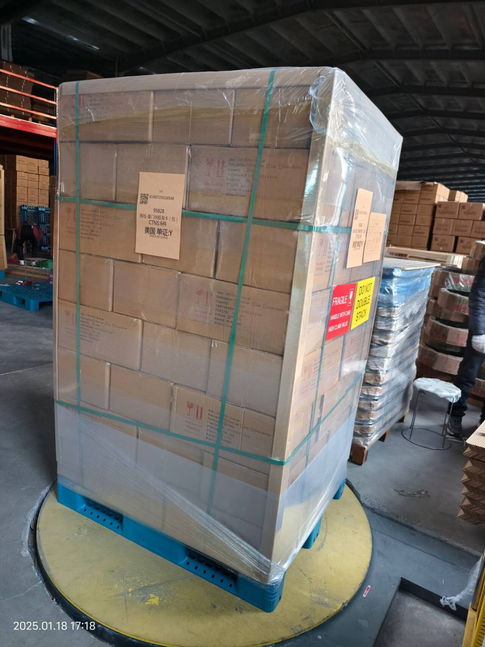
Pallet packing and protective foam support breakage control for glass jar shipments. Source: Honor Packaging.
Budget, sampling, and carton planning
The documented 250 pieces per carton is useful for pilot planning, but it should not be confused with a minimum order quantity. A buyer may need fewer pieces for a bench sample and more for a production trial. Ask for the sample quantity, carton configuration, and any minimum that applies to the exact SKU. The 250-piece carton is a packing fact, not a commercial term.
Cost comparison should follow the closure decision. A child-resistant jar carries a different closure and validation burden from a vacuum-seal jar. A vacuum jar carries a different closure-validation burden from a child-resistant jar. If the buyer needs both functions, the development and testing path changes again. The useful budget unit is therefore the validated 5 ml package, not the bare jar. Include the cap, liner where applicable, sampling, test documentation, carton, pallet protection, and freight in the comparison. That approach prevents a low jar price from hiding a higher total package cost.
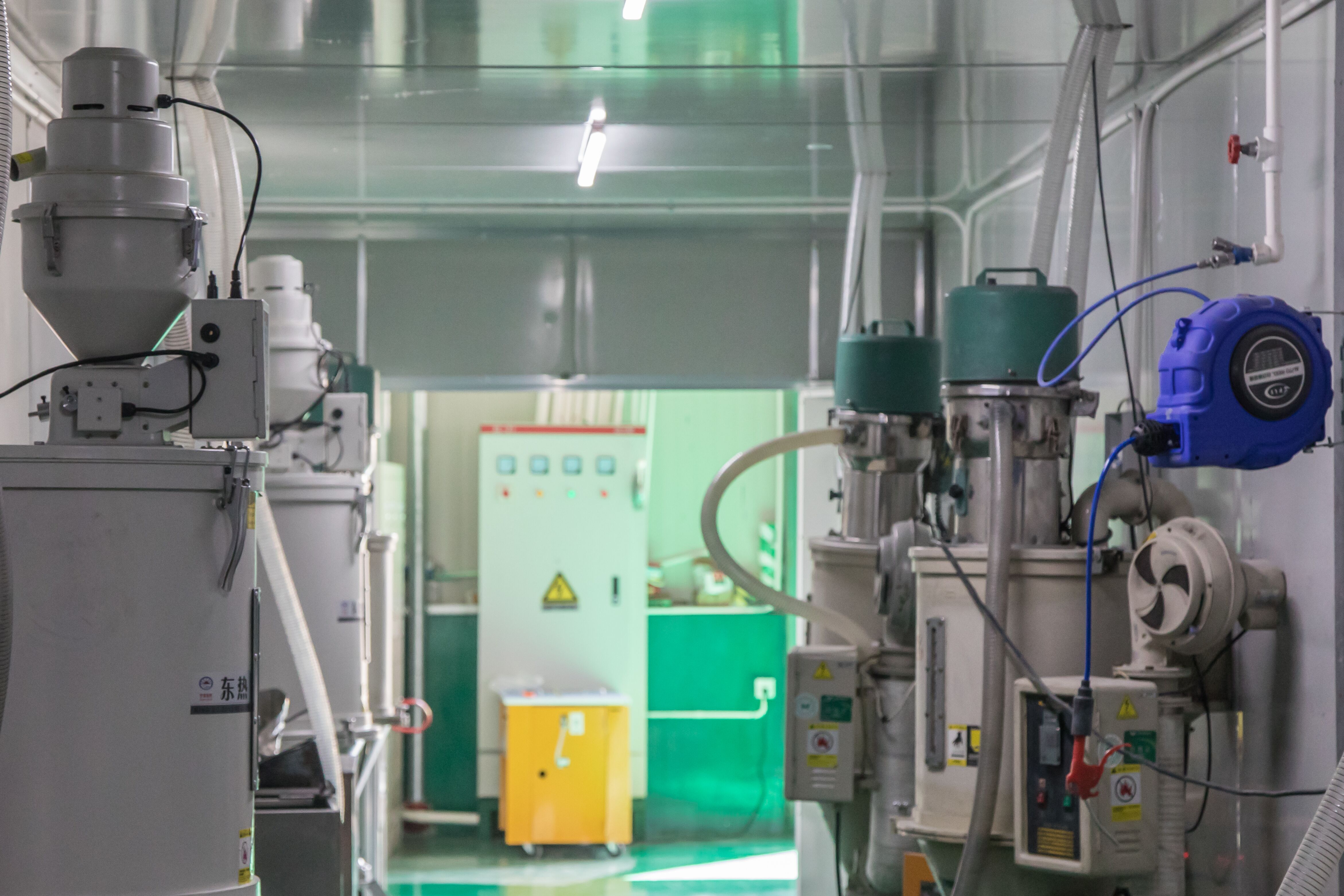
Factory production review supports sampling and order planning for protective packaging projects. Source: Honor Packaging.
FAQ: H19 vacuum and child-resistant 5 ml decisions
Does a child-resistant cap make the H19 jar compliant?
No. A child-resistant cap is a documented feature, but compliance depends on the exact package passing the applicable standard or regulation for the intended market and product. The buyer should request the test report for the finished 5 ml jar and cap combination, not just a statement that the closure is child-resistant. For reclosable packages, ISO 8317:2015 is a relevant standard to discuss with the supplier; for the United States, the applicable CPSC special packaging requirements should be confirmed for the product category.
Is the H19 Vacuum Click Jar child-resistant?
The supplied 5 ml vacuum-jar description documents square glass, a vacuum seal feature, 5 ml capacity, and 250 pieces per carton. It does not state a child-resistant closure. A buyer should not treat the vacuum jar as child-resistant unless the exact SKU is documented and tested to the applicable child-resistant standard. If child resistance is required, the H19 child-resistant concentrate jar is the documented path to evaluate first.
Which H19 jar fits a 5 ml food, cosmetic, or medical line?
For a 5 ml food line, choose the vacuum jar when limiting air exchange is the main protective need, and choose the child-resistant jar when child access is the main control need or the product falls within a special packaging rule. For a cosmetic line, the child-resistant series offers more documented shapes and colors, while the vacuum jar offers the documented vacuum seal in a square 5 ml format. For a medical or pharmaceutical line, start with the compliance requirement; if child resistance applies, evaluate the H19 child-resistant 5 ml SKU and verify its test evidence. In all three cases, confirm the exact SKU rather than relying on the series name.
Can one H19 jar provide both vacuum sealing and child-resistant access?
The supplied facts document the H19 Vacuum Click Jar with a vacuum seal and the H19 child-resistant concentrate jar with a child-resistant cap, but they do not document a single 5 ml SKU that combines both functions. A buyer who needs both should ask for the exact combined configuration and its validation evidence. If that evidence is not available, the two requirements should be treated as separate development items rather than assumed to coexist in one jar.
How should a buyer compare samples and quotes for the two paths?
Request samples of the exact 5 ml SKU, not a different capacity or shape. Test the real fill, closure application, transport condition, and any required child-resistant or vacuum-seal performance. Then request quotes on the same basis: exact jar, closure, 250-piece carton, sample quantity, test documentation, and delivery term. The documented series facts do not include a verified price difference, so the decision should use actual quotations. To move from comparison to validation, request a sample or quote from Honor Packaging and review the Honor Packaging brochure for the product and manufacturing overview.
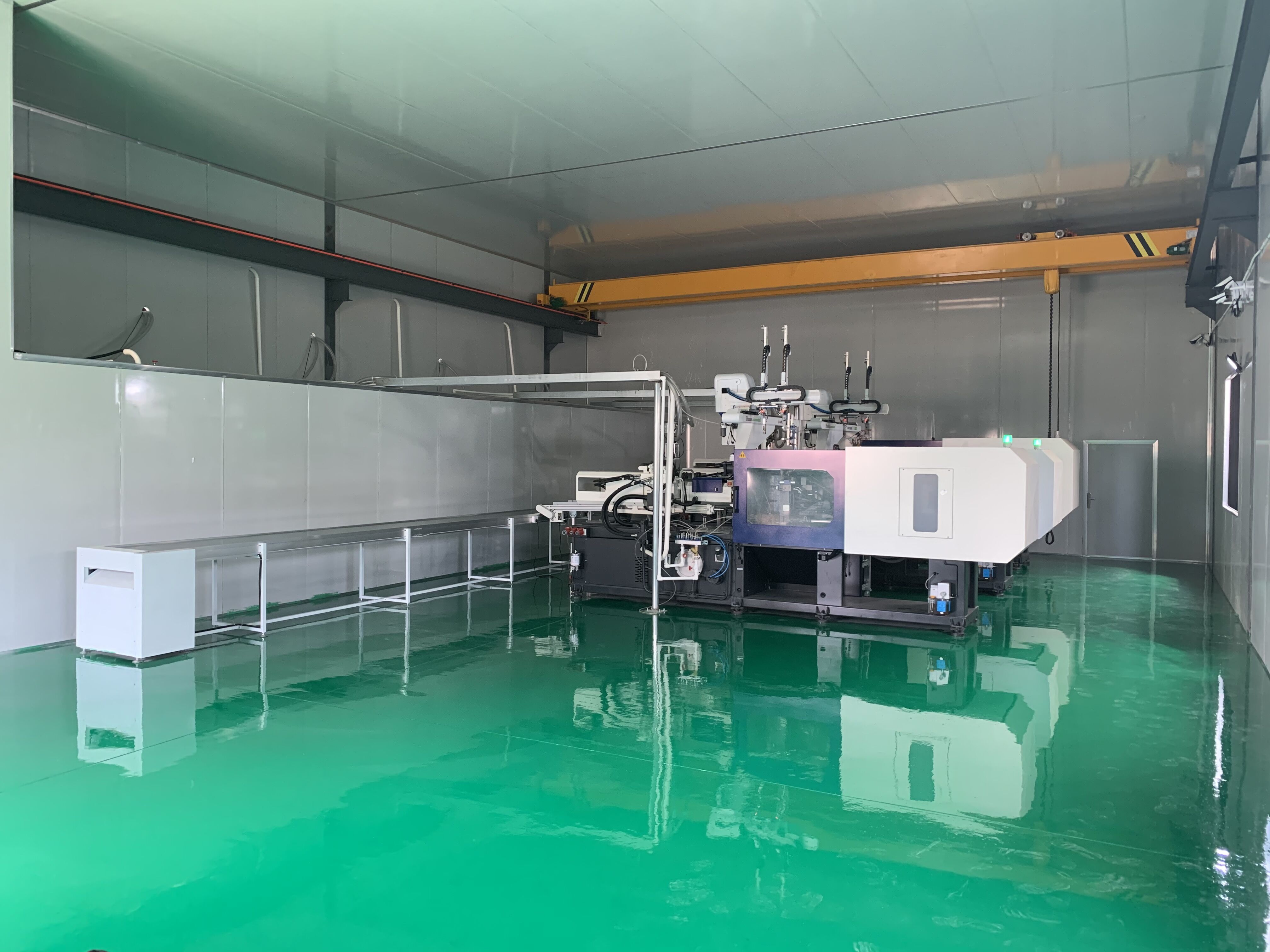
Production review before sample approval and order planning. Source: Honor Packaging.
Conclusion: choose the closure function, then the format
The H19 Vacuum Click Jar and the H19 child-resistant concentrate jar are both 5 ml glass packaging options, but they answer different decision questions. The vacuum jar is the documented choice when vacuum sealing is the required function, with a square glass format, 5 ml capacity, and 250 pieces per carton. The child-resistant jar is the documented choice when controlled access is the required function, with a 5 ml option, a 9 ml option, four shapes, three color variants, a 27 g to 38 g series weight range, and 250 pieces per carton.
For food, cosmetic, and medical lines, the safe sequence is closure risk first, exact SKU second, format and pack third, and validation evidence before approval. If the line needs both vacuum sealing and child-resistant access, do not assume the two documented paths combine automatically. Ask for the exact configuration and test evidence. A protective packaging decision is complete only when the closure function, jar format, carton plan, and compliance file all point to the same SKU.
Next step: define the required closure function, request the matching 5 ml sample, and compare quotations on the same package basis. Buyers who need a starting reference can review the Honor Packaging brochure before requesting a sample or quote.
Have Questions or Need More Details?
Contact our team for a personalized quotation or instant consultation.
Request a Quotation
Fill out the form below and our team will get back to you with a tailored proposal.
WhatsApp Direct Chat
Prefer to chat in real-time? Message us on WhatsApp for instant assistance & quick answers.
- Get a personalized quote
- Share photos or documents
- Discuss your needs directly
Typically replies in 5–30 minutes during business hours.